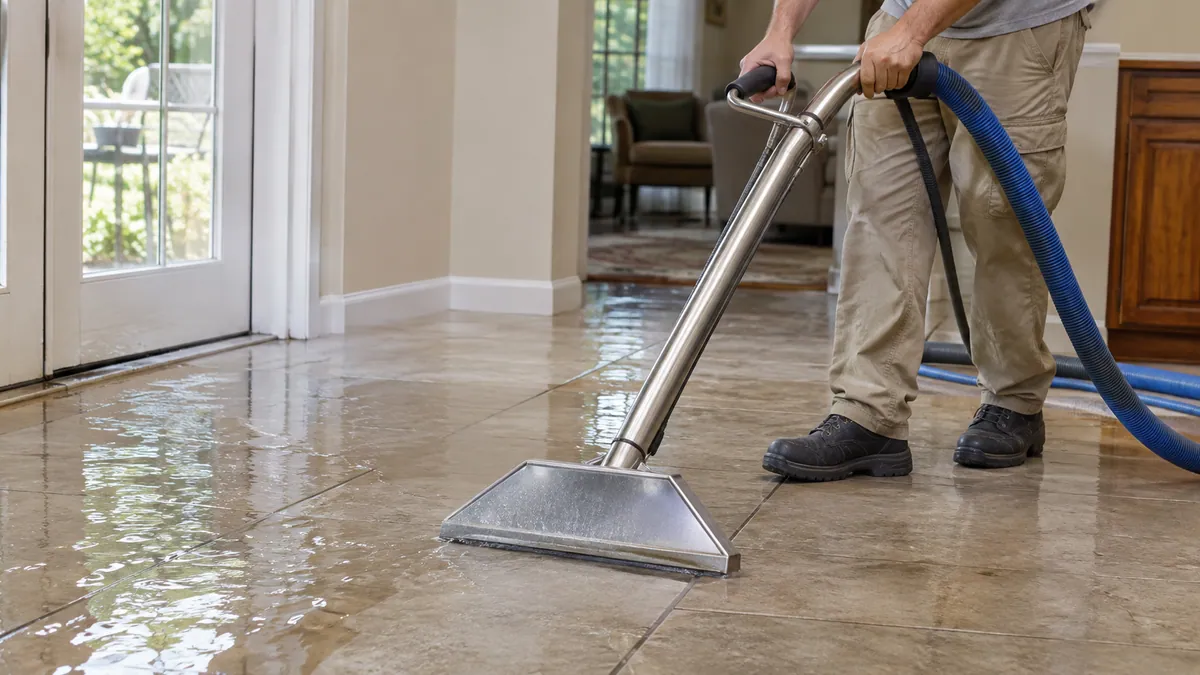
Water extraction is the removal of pooled or absorbed water from an affected property. Depending on water depth and access, a provider may use pumps, wet vacuums, or specialized floor tools. Extraction is usually followed by an assessment of damp materials and a drying plan. We help callers seeking water removal services near me reach independent providers where available; equipment and methods vary by provider and job.
Questions to discuss with a provider
Removing standing water is only one part of drying
After visible water is removed, moisture may remain in carpet, flooring, wall cavities, or other materials. Ask what areas were checked, whether additional drying is proposed, and what measurements will be used to decide when the work is complete.
✓Referral options for standing water removal
✓Provider assessment of depth, access, and water source
✓Discussion of what happens after bulk water is removed
✓Clear questions about disposal, drying equipment, and project cost
Standard Restoration Workflow
1
Check conditions
The provider evaluates water depth, source, access, and any safety concerns before selecting an approach.
2
Remove pooled water
The provider may use pumps or extraction tools suited to the space and water conditions.
3
Assess damp materials
Carpet, flooring, walls, and other materials may need separate inspection after standing water is gone.
4
Discuss drying and follow-up
Review the proposed equipment, monitoring, disposal, and any additional work before authorizing it.
Frequently Asked Questions Regarding Water Extraction and Removal
A household wet vacuum may help with a small, safe spill, but it may not be suitable for deep water, contaminated water, or moisture trapped in building materials. Ask a provider about the conditions at your property.
Not necessarily. Extraction removes liquid water; damp materials may still need controlled drying and follow-up checks.
A provider can assess water depth, the source, electrical safety, and appropriate discharge options before recommending pumping.
Water volume, access, contamination, affected materials, equipment, disposal requirements, and follow-up work can all affect a provider's estimate.
Emergency Water Help
Water Extraction and Removal
Call to ask whether an independent provider serves your area. The provider will explain its availability, assessment, and terms directly.